
Medication management in Baltimore
Know what you take, and why.
Juggling prescriptions can be confusing and even risky. We review everything you take, simplify where we can, and make sure each medication is doing its job safely.

- Complete medication reviews
- Interaction checks
- Dose adjustments and monitoring
- Refills for ongoing conditions
- Help with cost and access
Bring the whole bag.
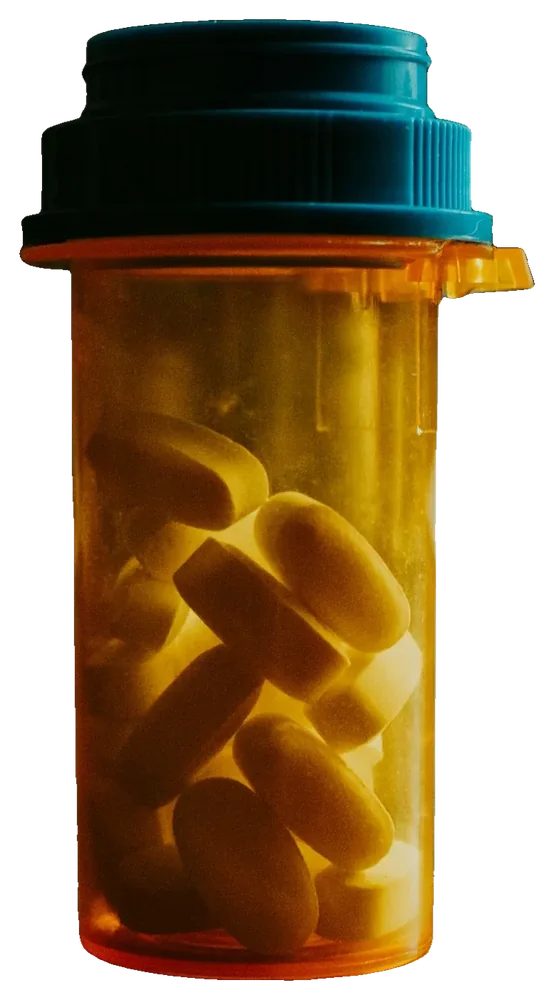
The most useful thing you can do is bring every medication you take in its original bottle, including over-the-counter medicines, vitamins and supplements. A list works too, but bottles are best.
We go through them one at a time and you leave with a single list that makes sense.
Review
We look at everything you take, what each one is for and whether you still need it.
Check for conflicts
We look for medications that don't work well together and for duplicates prescribed by different providers.
Adjust
We change doses or medications when something isn't working, causes side effects or is no longer needed.
Keep watch
Regular check-ins, and lab work when needed, make sure your medications stay effective and safe.
What should I bring to a medication review?
Bring everything you take, not only the prescriptions. The more complete the picture, the more useful the review.
If carrying it all is hard, a written list or a photo of each label helps too.
- Every prescription
- Pills, inhalers, eye drops, creams, patches and injections, in their original containers when you can. The label shows the strength, the directions and who prescribed it.
- Over-the-counter medicines
- Pain relievers, allergy and cold medicines, heartburn tablets, sleep aids and laxatives. They count as medications and can interact with prescriptions.
- Vitamins, supplements and herbs
- These can change how a prescription works, so they belong on the list too.
- Your own list, if you keep one
- A good list has each medicine's name and strength, what it is for, and when and how much you take.
- Allergies and past reactions
- Tell us about any medicine that has caused a rash, swelling, stomach trouble or anything else you didn't expect.
- Who else prescribes for you
- The names of your other providers and your pharmacy, plus your discharge papers if you were recently in the hospital.
- Your questions
- Good ones to ask: Do I still need all of these? What is each one for? What should I do if I miss a dose? Is it safe to stop this one, and how?
Especially helpful if you
Medication management is part of every patient's care here. It makes the biggest difference when life or health has gotten complicated.
- Take several medications
- More prescriptions means more chances for interactions and confusion.
- See more than one provider
- We bring all your prescriptions into one clear plan and coordinate with the others.
- Are in recovery
- We make sure every prescription supports your recovery.
- Recently left the hospital
- We sort out what changed and what to take now. After-hospital care
Why medication management in Baltimore primary care prevents harm.
Medicines help most when they are the right ones, at the right dose, taken the right way. In the United States, harm from medications leads to more than one and a half million emergency department visits each year. A regular review with a provider who knows your whole list is one of the simplest ways to lower your own risk.
- Interactions
- One medicine can change how another works. Some interactions are mild and some are serious. Alcohol and certain foods can interact with medicines too.
- Duplicates and leftovers
- When more than one provider prescribes for you, it is easy to end up on two medicines for the same problem, or on one you no longer need.
- Side effects that add up
- The more medicines you take, the more likely side effects become, and some raise the risk of falls. Tell your provider about any new symptom after a medication change.
- Changes after a hospital stay
- Medicines are often added or changed in the hospital. Checking the new list against the old one catches mix-ups before they cause problems.
- Doses that no longer fit
- Bodies change with age and health, and older adults may process medicines more slowly. A dose that was right years ago may need adjusting.
Between visits. Keep one up-to-date list and carry a copy. Update it whenever something is added, changed or stopped. Share it with every provider you see and with someone you trust. Filling your prescriptions at one pharmacy, when you can, keeps your records in one place.
Refills and cost.
Refills. Call our office or ask your pharmacy to send us a refill request. Please allow a few business days, and reach out before you run out.
When a medication is hard to afford. Tell us. We can look at lower-cost alternatives and generic options, and help you work through coverage problems.
Can you manage medications another provider prescribed?
Often, yes. We'll review them with you and coordinate with your other providers so everyone is on the same page.
Should I stop a medication if I think it's causing side effects?
Call us first. Some medications are unsafe to stop suddenly, and there is often a simple fix such as a different dose or timing.
Do supplements and over-the-counter medicines matter?
Yes. They can interact with prescriptions, so we want to know about all of them.
Where this comes from
- U.S. Food and Drug Administration, Create and keep a medication list for your health
- Centers for Disease Control and Prevention, Medication safety and your health
- MedlinePlus (National Library of Medicine), Taking multiple medicines safely
- National Institute on Aging, Taking medicines safely as you age
- Agency for Healthcare Research and Quality, Readmissions and adverse events after discharge
Questions people ask about this
All answers



The door is open.
Book your first visit online, or call and a real person from our team will set it up with you. You can tell us as much or as little as you want.