
What happens at a first addiction treatment visit?
Not knowing what you are walking into keeps a lot of people from making the call. Here is the visit from start to finish.
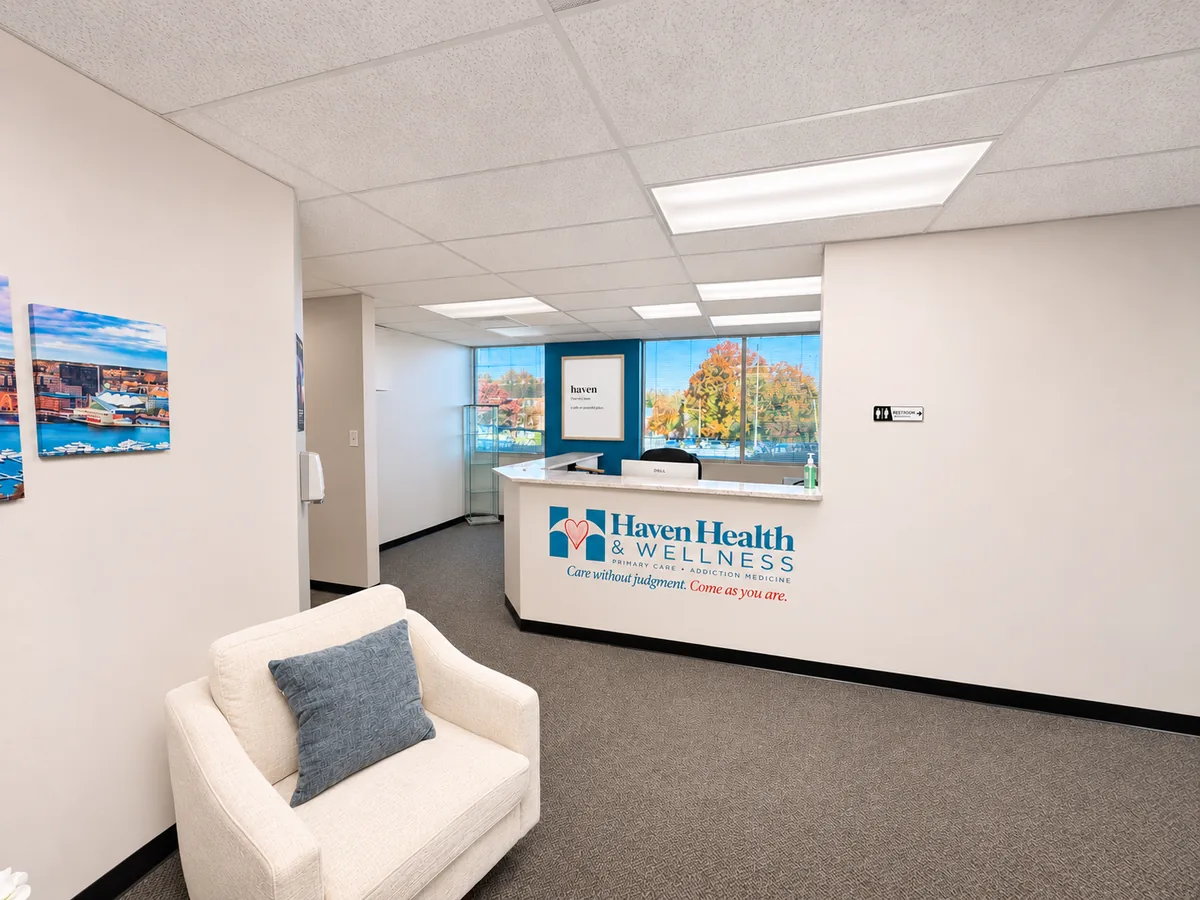
A first visit is mostly a conversation. We ask about your health, what you have been using and what you want to change. We run a few basic tests, and then we agree on a plan with you. If medication is a good fit, you leave knowing exactly how and when to start it. You don't have to promise to quit forever.
Do I need to be sober or in withdrawal when I come in?
No. You don't need to be sober or in withdrawal for a first visit, so come as you are. You don't need to stop using before the visit, and for alcohol or sedatives like benzodiazepines you should not stop suddenly on your own, because that can be dangerous.
If you are hoping to start buprenorphine, the medicine in Suboxone, it is usually taken once withdrawal has begun. SAMHSA says to wait at least 12 to 24 hours after using opioids and to be in the early stages of withdrawal. When you call, tell us what you use and when you last used, and we will tell you how to time things. If the timing is off on the day, we still see you and plan the start from there.
What will you ask me?
At a first visit we ask about your substance use, your health and what you want from treatment. That includes:
- What you use, how much, how often and how you take it
- When you last used
- Any past overdoses
- Treatment you have tried and how it went
- Your medical history, medications and allergies
- Your mood, sleep and stress
- Your living situation and who is in your corner
- What you want from treatment
Honest answers help us keep you safe, especially about the amount you use and anything else you take. You won't be judged for any of it, and you can skip a question you aren't ready to answer.
Will I be drug tested?
Usually, yes. A urine drug test is a normal part of a first addiction treatment visit. It tells us what is actually in your system, which often includes things people did not know they were taking, such as fentanyl. We use the result to choose a safe medication and dose. A positive result doesn't get you turned away or reported. It is medical information, and it is treated like any other lab result.
We may also offer blood work, including tests for hepatitis C and HIV, a check on your liver, and a pregnancy test if that applies to you. Much of this can be collected in our office during the same visit.
Will I get medication that day?
Often, yes. Medication can start the day of your first visit if it is right for you and it is safe to start. Buprenorphine can usually be started quickly. Some people take the first dose at home after the visit, following clear written instructions, and we stay in touch over the first few days.
Some options take longer. Vivitrol requires you to be off opioids first, typically for 7 to 10 days. The FDA label for Vivitrol recommends at least that long. The monthly Sublocade injection comes after you have started buprenorphine as a film or tablet. We explain the differences in Suboxone, Sublocade or Vivitrol: which one is right for me?
What should I bring?
Bring these to a first addiction treatment visit if you have them:
- A photo ID and your insurance card, if you have them
- A list of your medications, or the bottles themselves
- Any discharge papers from a recent hospital, detox or program stay
- The name of your pharmacy
- A support person, if you would like one with you
If you are missing some of these, come anyway. We can sort out the paperwork together.
Is it confidential?
Yes, addiction treatment is confidential. Substance use treatment records have extra protection under a federal rule called 42 CFR Part 2, on top of the privacy rules that cover all medical care. We don't share them with your employer, your family or anyone else without your written permission, apart from a few narrow exceptions. We spell those out in Will anyone find out I'm in addiction treatment?
What happens after the first visit?
After the first visit, follow-up visits are closer together at the start, often weekly, and spread out as you get steadier. At those visits we check how the medication is working, adjust the dose, and help with whatever else is getting in the way. That can include counseling and peer support, other health problems, and referrals if you need a higher level of care. Some follow-ups can be done by telehealth.
If you use again, come back and tell us. It happens to a lot of people, and it means we adjust the plan. It doesn't mean you have failed or that we are done with you.
Ready to set it up? Call us or book online. You can say as little as you like on the phone. You can also read more about addiction medicine at Haven first.
Where this comes from
- SAMHSA, Treatment Improvement Protocol 63: Medications for Opioid Use Disorder
- SAMHSA, What is Buprenorphine?
- American Society of Addiction Medicine, National Practice Guideline for the Treatment of Opioid Use Disorder
- American Society of Addiction Medicine, Appropriate Use of Drug Testing in Clinical Addiction Medicine
- U.S. Food and Drug Administration prescribing information for Vivitrol, on DailyMed from the National Library of Medicine
- U.S. Food and Drug Administration prescribing information for Sublocade, on DailyMed from the National Library of Medicine
- Electronic Code of Federal Regulations, 42 CFR Part 2: Confidentiality of Substance Use Disorder Patient Records